YESHUA'S HOUSE

Appointed Times

At Yeshua's House, we observe Yahweh's Appointed Times because they are cycles ('agol) of righteousness (Ps 23:3). When we observe them, not only are we walking in obedience (Jn 14:15), we are annually proclaiming the life-giving work of our wonderful Messiah.

Our Approach to God's Appointed Times

We choose charity and love.

At YH, we have no desire to be dogmatically “right” on this matter. We’ll try, and we’ll refine our thinking in years to come, but for now we’ve chosen what’s known as a sighted-moon calendar. Are we right? We think so, but we can’t know for sure. Regardless, we must all remember that Yahweh’s Appointed Times are rehearsals – shadows of the substance. The shadows are important, to be sure, but the substance is better.

For these reasons (and many others), we choose charity and love. To our brothers and sisters who are diligently trying to obey our Father in heaven, but observe the calendar a day before or after we do (or even a month), we applaud you. You are trying and we commend you for it. We count it a privilege to walk alongside you!
“For now we see in a mirror dimly, but then face to face. Now I know in part, but then I will know fully just as I also have been fully known. But now abide faith, hope, love — these three; but the greatest of these is love.”

1 Corinthians 13:13, 14

We're doers.

Spring Events

In the Bible, events are different than special days.
Understanding the events and special days outlined in Leviticus 23 takes a little while. In fact, we ask people to give it five or so years. But since you're here to learn, here's your first mini-lesson. The Bible differentiates events from special days. For example, Passover is the first event (a meal) of the first day of Unleavened Bread (a special day).

Passover

Pesach
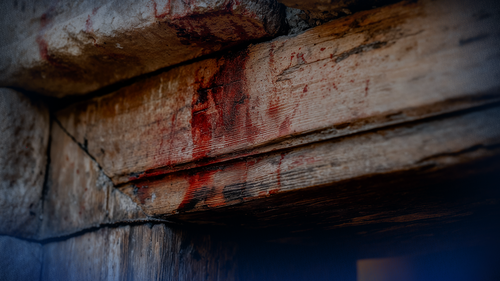
Passover is the first observance of the week-long Feast of Unleavened Bread. For the Israelites, it pointed to the sacrificial death of Yeshua. For the believer, it still points to Jesus's death. It's the way our Father commands us to remember that His son, Yeshua, purchased us with a price - His blood.

First Fruits

Yom HaBikkurim
You're learning, and we don't want to overwhelm you. That said, while some fellowships observe First Fruits on the day following the First Day of Unleavened Bread, YH always begins First Fruits on a Sunday. That's when our Savior rose, the first fruit from the dead!

Count to 50

Sefirat HaOmer
On First Fruits, we begin counting, seven weeks of seven, then one more day - 50! What started with a harvest of One ends with the harvest of many! In this way, First Fruits and Shavuot are tied together. Yeshua first, then anyone who's trusted in Yeshua for salvation - His harvest!

The Lord's Supper

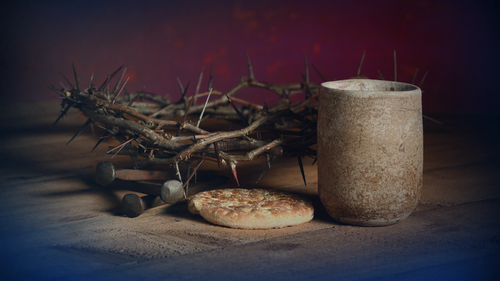
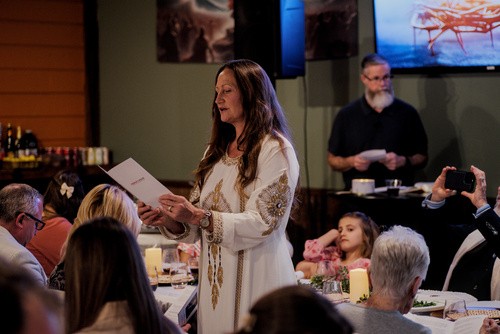
In "a large upper room furnished and ready" (Mk 14:15), Yeshua said to his disciples, "This is My body, which is for you" and "This cup is the new covenant in My blood; do this, as often as you drink it, in remembrance of Me" (1 Cor 11:24, 25). At Yeshua's House, while we aren't opposed to a more-frequent Lord's Supper observances,1 we presently observe the rite once a year, on the night before Passover. For us, it's the most sacred observance of the year. The other events and special days are important, to be sure, as they represent the pattern of heaven. But at Yeshua's House, it's the New Covenant offered us in response to our "fault" (Heb 8:8) that truly affords us passage from death to life.
1At Yeshua's House, we fully understand the varying viewpoints on the timing of the Lord's Supper. We're not dogmatic. That said, if you'd like to learn more about our approach to the pre-Passover timeline, we think this presentation from Psalm 119 Ministries does a good job. Note: this is not a carte-blanche endorsement of Psalm 119 Ministries. Instead, at Yeshua's House, we "test everything."

Spring Appointed Times

While each event is an appointed time, not all appointed times are events. What's more, not all appointed times are feasts. To keep things simple for now, Yeshua's House equates Yahweh's appointed times with High Sabbaths or, in Hebrew, Mikra Kodesh. And when we do it that way, something amazing happens. Instead of Shavuot peering atop the chiastic structure, Yeshua's return as King takes center stage. We love it!

Day 1 of Unleavened Bread

Chag HaMatzot
The Commandment
The appointed time of Unleavened Bread is a seven-day observance that begins with the Passover meal, a sabbath, and a holy assembly. The biblical instruction is simple. Remove all leaven from your dwellings and eat unleavened bread on each of the seven days. 
The Object Lesson
Having been saved from sin and death, our God wants to abandon sin and death's hold on us. That "hold," and how it permeates the rest of our lives, is represented by leaven.
The Significance
After escaping Egypt, the Israelites' first stop (Day 1) was Succoth. As soon as you are redeemed by the blood of the Passover Lamb, your lifestyle changes from "settled in the world" to "pilgrim in the wilderness." On Day 1, you are now "tabernacling" with the Most High.

Day 7 of Unleavened Bread

Chag HaMatzot
The Commandment
On the last day of Unleavened Bread, we're to do no regular work (a sabbath) and gather together in holy assembly. 
The Object Lesson
Having trusted in the Lord to take care of us post-escape from Egypt — from all that "holds" us — we arrive at a place characterized by finality and faith. Having rid of  the "old leaven" and "the leaven of malice and wickedness," and having giving ourselves to "the unleavened bread of sincerity and truth" (1 Cor 5:8), it's now time to be re-leavened with Yeshua and His Kingdom.
The Significance
We've done the math. On Day 7, led by fire and a cloud, the Israelites likely found themselves at the edge of would-be watery grave (Gulf of Aqaba). Behind them, Pharaoh's army. In front, a daunting sea. But then, on God's command, Moses raises his staff and the sea splits. They cross. The old is gone. The new has come. And they sing. It all points to a coming millennial kingdom beyond a time of purification. You can hear echoes of it Revelation 15:3. "And they sang the song of Moses, the slave of God, and the song of the Lamb."

Feast of Weeks

Shavuot
The Commandment
From First Fruits to Shavuot, we're to count to 50. It's called counting the "omer." On Shavuot, we're to do no regular work (a sabbath) and gather together in holy assembly. 
The Object Lesson
When we count seven sevens from the day of Jesus's resurrection, we're tying Jesus as first fruit to the harvest - that's anyone who's placed their faith in Jesus for the removal of sin! When the seven weeks have passed, we count one more day - forty-nine plus one. On that day, the High Priest waves two leavened loaves before Yahweh.
The Significance
The Father walks us through cycles of righteousness. Or better put, cycles of His righteousness. Yeshua is the Righteous One, but we're invited to participate in His redeeming narrative! When we count to 50, we remember and anticipate three converging aspects of the Kingdom: the giving of God's righteous instruction, the Spirit empowering us to do it, and the coming Jubilee at the outset a Yeshua's millennial reign. And the two loaves? That's one King, sitting on David's thone, ruling over a the coming United Kingdom of Israel and Judah!

Fall Appointed Times

Feast of Trumpets

Yom Teruah
Coming soon.

Day of Atonements

Day of Atonements
Coming soon.

Feast of Tabernacles

Sukkot
Coming soon.

Shemini Atzeret

The Eighth Day
Coming soon.

Definitive, yet graceful.

Our hearts matter.

Our Father isn’t looking for a bunch of busybody events.
He’s looking for circumcised hearts.

When does the head of the biblical year begin?

(1) After the spring equinox, (2) at the [sighting of] the new moon, in Israel, (3) when all the land is expected to yield its first fruit of barley (4) on the first day of the week after the first day of Unleavened Bread.

Important Texts & Understandings

Exodus 12:2

“This month shall be the beginning of months for you; it is to be the first month of the year to you.”

Colossians 2:16, 17

"Therefore, no one is to judge you in food and drink, or in respect to a festival or a new moon or a Sabbath day — things which are a shadow of what is to come; but the substance belongs to Messiah."

What's Paul saying?

Therefore, standing firm in Yahweh’s instruction, let us do what God has commanded us to do.

Deuteronomy 16:1

“Keep the month of Abib and celebrate the Passover to Yahweh your God, for in the month of Abib Yahweh your God brought you out of Egypt by night.”

1. After the spring equinox

First witness: the sun (a star)

In ancient Israel, the Israelites used the sun and moon as signs to determine Yahweh’s appointed times (seasons, days, years). The head of the year should be at or after the spring equinox to ensure both the spring appointed times and Sukkot (Tabernacles) fall in their appropriate seasons.[5]

Signs in the sky

While YH recognizes YHWH placed the stars in the heavens (constellations) and shows in the night’s sky in regular intervals, YH does not overemphasize the stars in determining the head of the year. Rather, the stars serve as one of many important and glorious “witnesses.”

Hillel

The Hillel (traditional Jewish) calendar also considers the tekufot, which are the approximate times of the equinoxes and solstices. These are used to further refine the calendar and ensure that Yahweh’s appointed times fall in their appropriate seasons.

Scripture

Gen 1:14 “Then God said, ‘Let there be lights in the expanse of the heavens to separate the day from the night, and let them be for signs and for seasons [moed] and for days and years.’”

Gen 1:16 “So God made the two great lights, the greater light to rule the day, and the lesser light to rule the night, and also the stars.”[4]

Job 38:31-33 “Can you bind the chains of the Pleiades, or loose the cords of Orion? Can you lead forth a constellation in its season, and guide the Bear with her satellites? Do you know the statutes of the heavens, or fix their rule over the earth?

Ps 19:1 The heavens are telling of the glory of God; and the expanse is declaring the work of His hands.

2. At the new moon (in Israel)

Second witness: the moon

In ancient Israel, the Israelites used the moon to determine months. After the night of a no-moon, a new moon presented as a small sliver in the sky. This marked the beginning of a month. A full moon marked the middle.

To reiterate, YH is not dogmatic. While we seek to do right, we have no need to chastise other people or groups also seeking to do right. For example, we’re Tim Hegg fans! Yet, on this point we differ. Concerning the new moon, Hegg writes, “The method of intercalating was, from ancient times, a source of debate, and we know that various methods did evolve. That there are indications in the biblical text of a calendar by which months could be known is evident, for Jonathan knows that ‘tomorrow’ will be the new moon.”

To counter this logic, another thought leader has pointed out, “It has been suggested that the ancient Israelites could have looked at the ‘Old Moon’ and determined the Day of Conjunction by when the Old Moon was no longer visible in the morning sky. However, such a method would not work in the Middle East where the so-called “concealed moon” can remain concealed for as many as 3.5 days! It is in fact common for the moon to stay concealed for 2.5 days and in such instances how would the ancient Israelites have known which day was the Day of Conjunction?”

While YH has taken a “side,” the truth is it’s a work-in-progress. What’s more, we plan for congregational purposes. And again, we could not choose both viewpoints, though we readily recognize the valid points each side is making.

New Moon Practicalities

While YH sights the new moon for teaching/obedience purposes, to be aware of the seasons and so forth, we also recognize CA is not our true home. Rather, our eternal home is in Israel, the Promised Land.

Gen 12:1 “And Yahweh said to Abram, “Go forth from your land, And from your kin And from your father’s house, To the land which I will show you.”

For practical purposes, though we'll always try to "get it right," Yeshua’s House has determined the astronomical first sliver (new moon) in Israel is sufficient. Additionally, Yeshua’s House recognizes that “conjunction” (i.e., astronomical new moon) isn’t, necessarily, incorrect.

Scripture

Ps 81:3 Blow the trumpet at the new moon, at the full moon, on our feast day.

Ps 89:3 It shall be established forever like the moon, and the witness in the sky is faithful. Selah.

1 Sam 20:18 Then Jonathan said to him, “Tomorrow is the new moon, and you will be missed because your seat will be empty."

The New for the Seventh Month

Lev 23:24 “Speak to the sons of Israel, saying, ‘In the seventh month on the first of the month you shall have a rest, a memorial by blowing of trumpets, a holy convocation.”

For practical purposes, Yeshua’s House has determined the astronomical first sliver (new moon) in Israel is sufficient.

Two Day Observance

“[Even] when the calendar was established based on the sighting of the moon, the majority of the inhabitants of Eretz Yisrael would celebrate Rosh HaShanah for two days, because of the doubt involved….the day on which the court established the new month, because the messengers would not depart on the holiday” (5.7). For a full discussion, see Mishneh Torah, Sanctification of the New Month.

3. When the first fruit is ready (in Israel)

Third witness: the barley

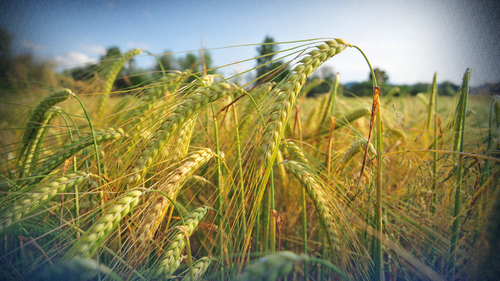
The head of the year, which starts in spring, brings life! In all the land of Israel, when it’s anticipated that all households will have a first fruit of barley to offer Yahweh – it’s this corporate ripening that tells us it’s time to mark the head of the (liturgical) year. If the ripening of the barley proves too ambiguous, YH then defers to the Hillel calendar (but only with reference to the month of Abib).

Scripture

Ex 9:31, 32 (Now the flax and the barley were struck down, for the barley was in the ear and the flax was in bud. But the wheat and the spelt were not struck down, for they are late-ripening.)”

Ex 23:15 “You shall keep the Feast of Unleavened Bread; for seven days you are to eat unleavened bread, as I commanded you, at the appointed time in the month Abib, for in it you came out of Egypt. And none shall appear before Me empty-handed.”

Ex 34:23, 26 “Three times a year all your males are to appear before the Lord Yahweh, the God of Israel … You shall bring the very first of the first fruits of your ground into the house of Yahweh your God.”

4. On the first day of the week

Yeshua's resurrection

At YH, we understand the sabbath in this context as the weekly seventh-day sabbath. By understanding the scenario this way, it allows seven complete sabbaths to occur before the fiftieth day. It also connects Yeshua with First Fruits and the goal of First Fruits – a harvest that culminates in the giving of the Spirit and, ultimately, Jubilee.

Counting the omer

Q: When does the omer count begin?
A: On the first day of the week after the weekly sabbath
By our reckoning, the counting of the omer begins on the first day of the week; it marks the time when our Messiah, the First Fruit from the dead, raised from the grave and forever serves as our eternal High Priest. The first day of the week, always a Sunday, follows the seventh day of the week.

Maybe You're Right

YH recognizes and appreciates those who reckon the beginning of the omer count on the first day after the first day of Unleavened Bread. Doing so allows for fifty days between the escape from Egypt to the Mountain.

Scripture

Lev 23:10 “Speak to the sons of Israel and say to them, ‘When you enter the land which I am going to give to you and reap its harvest, then you shall bring in the sheaf of the first fruits of your harvest to the priest.”

Lev 23:15, 16 “You shall also count for yourselves from the day after the sabbath, from the day when you brought in the sheaf of the wave offering; there shall be seven complete sabbaths. You shall count fifty days to the day after the seventh sabbath; then you shall bring a new grain offering near to Yahweh.”

Four Perspectives

To our brothers and sisters who are diligently trying to obey our Father in heaven, but observe the calendar a day before or after we do (or even a month), we applaud you. You are trying and we commend you for it. We count it a privilege to walk alongside you!

Why not the others?

At YH, we respect and acknowledge the various calendars observed by others. In fact, a handful of our members hold to other calendars while promoting a spirit of unity.

Hillel

Why not the Hillel calendar?
The Hillel calendar has merit in that it acknowledges the formal priesthood as final judge, fostering unity. At YH, however, we believe that, as a kingdom of priests, we are permitted to adhere more closely to the Torah’s directives. We hold that this approach helps us better align with a narrative that honors the ministry and person of Yeshua. At YH, the Scriptures are our final authority.
Ez 44:10, 11 “But the Levites who went far from Me when Israel went astray, who went astray from Me after their idols, shall bear the punishment for their iniquity. Yet they shall be ministers in My sanctuary, having oversight at the gates of the house and ministering in the house ….”

Ez 44:24 “And in a dispute, [the Levitical priests, the sons of Zadok] shall take their stand to judge; they shall judge it according to My judgments. They shall also keep My laws and My statutes in all My appointed times and keep My sabbaths holy.”

Mt 23:2 “The scribes and the Pharisees have seated themselves in the chair of Moses.”

Zadokite

Why not the Zadokite calendar?
At YH, we acknowledge the historical significance of Zadok and his descendants. While the formal priesthood during the time of Yeshua had instances of corruption, the priestly lineage of Zadok did not seem to share these issues. The Zadokite calendar is derived from the Damascus Document along with the Book of Jubilees and the Book of Enoch, both considered apocryphal works. Although we recognize the historical value of the calendar passed down by the Zadokite priests, we do not think it prudent to adopt a calendar based on apocryphal texts, especially when the instruction varies significantly from the written Torah.
Ez 48:11 “It shall be for the priests who are sanctified of the sons of Zadok, who have kept the responsibility given by Me, who did not go astray when the sons of Israel went astray as the Levites went astray.”

Conjunction

Why not the Conjunction calendar?
In many respects, the Conjunction calendar is comparable to the Sighted Moon calendar. It is important to acknowledge that there is no universally accepted version of the Conjunction calendar. Nevertheless, it generally appears that the Conjunction calendar places greater emphasis on the constellations, sun, and moon as primary indicators, while the ripening of barley serves as a secondary reference.

While YH has no major issues with the Conjunction calendar, some groups may overemphasize constellations. Additionally, although the precise astronomical conjunction of the moon is valued, it seems to lessen the human interaction with YHWH’s creation.
Some who follow the conjunction calendar use the constellation Virgo rising in the east as a sign. Although YH is cautious about naming constellations, we acknowledge that Virgo, often shown as a maiden holding wheat, symbolizes harvest and seasonal cycles. This aligns with Ruth's story and Shavuot (Pentecost). We also note that pagan worship has wrongly distorted what YHWH created.