
The Six Functions of God’s Law
Everything God does has purpose, and it's good
The Israelites are thirty days into a fifty-day journey.[1] During the fifty days, YHWH tests Israel — in a formative way, wanting Israel to see, to know, that his regime is fundamentally different than Pharaoh’s. YHWH wants the Israelites to understand that what’s about to happen at Sinai is about service, but not the sort of service that oppresses the worshiper while at the same time bolstering the vain imaginations of a narcissistic king. Rather, the sort of service — the sort of worship — for which YHWH is looking is the sort that facilitates loving relationship.


From a mountain, pre-salvation, pre-exodus, YHWH makes a statement to Moses — I choose Israel (Ex 3:8, 12). From the same mountain, fifty or so days post-salvation, post-exodus, YHWH asks all Israel a question — Will you choose me?[2] This is where the story gets a little complicated, mostly because humans (especially those with western sensibilities) have difficulty conceiving of themselves as both individual and part of a composite whole. There were some, to be sure, who found themselves at the base of Sinai with this centering thought: Here we go again — some god is asking me to trade one set of oppressive and exhausting laws for another. But then there was another group, a group within the group. They were flawed, to be sure, given to the occasional relapse, but they had eyes to see both the insidiousness of Egypt’s gods and the lovingkindness of this other God — the passing over, the parting of the sea, the cloud by day, the fire by night, the manna, the meat, the water, the triumph over enemies. For these people, another line of thinking pervaded their consciousness: This God is majestic, holy, and awesome. This God works wonders. In lovingkindness, this God has saved us and now wants to lead us into his holy habitation by showing us how to live.[3]
If anyone’s ever led you to believe the laws YHWH gave at Sinai are oppressive or exhausting, you were lied to. The law of sin is oppressive and exhausting. The extra laws many of the hypocritical Jewish religious leaders added to YHWH’s laws are oppressive and exhausting. And yes, YHWH’s laws, if used improperly, have the potential of being oppressive and exhausting — like riding a bike in the wrong gear. But when interpreted properly, when understood as that which leads God’s people into YHWH’s holy habitation, the laws YHWH gave at Sinai are nothing short of life-giving. To better understand, it’s important to understand the six functions of the Sinaitic Covenant.
Footnotes
[1] Fifty days, or thereabouts, as the timing is not explicit.
[2] The question is inherent in the commandments (see Ex 20:6; Dt 5:10, 7:9, 11:1, 13, 30:16; Jo 22:5; Dn 9:4). Jesus said, “He who has My commandments and keeps them is the one who loves Me” (Jn 14:21). And yes, I’m equating Jesus with YHWH, for they are one; YHWH’s commandments are Jesus’s commandments. John wrote, “For this is the love of God, that we keep His commandments; and His commandments are not burdensome” (1 Jn 5:3).
[3] See Ex 15:11–13.
[2] The question is inherent in the commandments (see Ex 20:6; Dt 5:10, 7:9, 11:1, 13, 30:16; Jo 22:5; Dn 9:4). Jesus said, “He who has My commandments and keeps them is the one who loves Me” (Jn 14:21). And yes, I’m equating Jesus with YHWH, for they are one; YHWH’s commandments are Jesus’s commandments. John wrote, “For this is the love of God, that we keep His commandments; and His commandments are not burdensome” (1 Jn 5:3).
[3] See Ex 15:11–13.

What is Torah?
Torah means instruction. In the case of Yahweh's torah, the vibe is something like this: the loving instruction of a good father who only wants the best for his children. In Jewish circles, the Torah usually refers to the first five books of the Bible. Genesis. Exodus. Leviticus. Numbers. Deuteronomy. But sometimes, it's used more narrowly, referring to the commandments, statutes, and judgments of God. Some say there's 613 instructions, but at YH we're far less concerned about the number and far more concerned about applying, lawfully, all that applies (like Daniel would have done in Babylon).
So when Jesus said, "Go therefore and make disciples of all the nations, baptizing them in the name of the Father and the Son and the Holy Spirit, teaching them to keep all that I commanded you," we really do take the "baptizing" and "teaching" seriously. If we didn't, we wouldn't be making disciples of Jesus. And how do we know what Jesus commanded is, in fact, the Torah and not, say, Jesus's instruction in His Sermon on the Mount? Here's the simple answer. First, since we believe Jesus is God, the instructions given at Sinai are Jesus's instruction. Second, anyone who's given their heart to Jesus is no longer "of the nations" (gentile); instead, that person is grafted into Israel — which is good news, because that's who the New Covenant is with. And third, Jesus didn't come to abolish the Law. He certainly wanted to correct errant teaching regarding the Law (hence the Sermon on the Mount), but He didn't come to rid of it. In fact, doing so would have disqualified Jesus from being the Anointed One — the Promised Messiah.
So when Jesus said, "Go therefore and make disciples of all the nations, baptizing them in the name of the Father and the Son and the Holy Spirit, teaching them to keep all that I commanded you," we really do take the "baptizing" and "teaching" seriously. If we didn't, we wouldn't be making disciples of Jesus. And how do we know what Jesus commanded is, in fact, the Torah and not, say, Jesus's instruction in His Sermon on the Mount? Here's the simple answer. First, since we believe Jesus is God, the instructions given at Sinai are Jesus's instruction. Second, anyone who's given their heart to Jesus is no longer "of the nations" (gentile); instead, that person is grafted into Israel — which is good news, because that's who the New Covenant is with. And third, Jesus didn't come to abolish the Law. He certainly wanted to correct errant teaching regarding the Law (hence the Sermon on the Mount), but He didn't come to rid of it. In fact, doing so would have disqualified Jesus from being the Anointed One — the Promised Messiah.
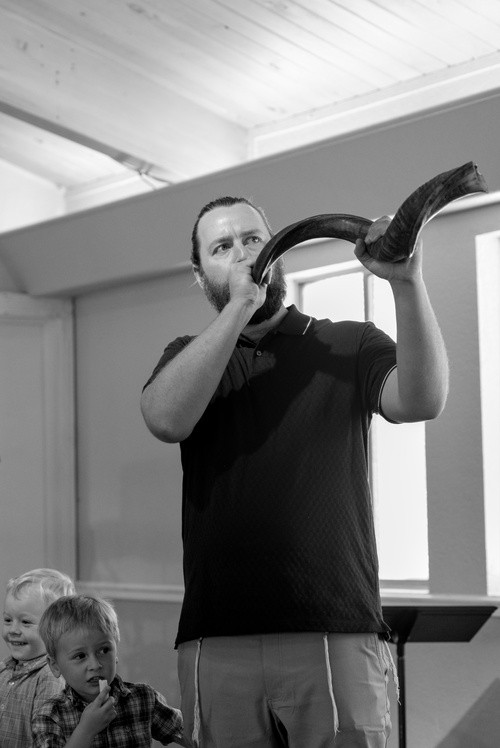
Gideon and Asa trust their father to teach them all that is good and right.

Purpose 1
To Serve as a Bridge Pre-First Coming
The Sinaitic Covenant served as a bridge between YHWH’s promises to Abraham and the seed that would bring about those promises. While you and I have the benefit of the Gospels, those who lived before Jesus’s first coming did not. To help those people, YHWH provided a custodian—a paidagogos — to “guard” them until Messiah’s arrival. Here’s the way Paul communicates the idea in Galatians, step-by-step.[1]
Step 1: Jesus is the promise to which the Abrahamic Covenant points.
Now the promises were spoken to Abraham and to his seed. He does not say, “And to seeds,” as referring to many, but rather to one, “And to your seed,” that is, Christ (3:16).
Step 2: The Sinaitic Covenant does not invalidate God’s promise to Abraham.
What I am saying is this: the Law, which came four hundred and thirty years later, does not invalidate a covenant previously ratified by God, so as to nullify the promise. For if the inheritance is based on law, it is no longer based on a promise; but God has granted it to Abraham by means of a promise (3:17, 18).
Step 3: Rather, the terms of the Sinaitic Covenant were given, in part, so you might recognize the condition of your hearts and the One who would fix it all.
Why the Law then? It was added because of transgressions … until the seed would come to whom the promise had been made (3:19).
Step 4: So then, the Law functioned like a custodian—to keep and protect you until Jesus arrived.
But before faith came, we were kept in custody under the law, being shut up to the faith which was later to be revealed. Therefore the Law has become our tutor to lead us to Christ, so that we may be justified by faith (3:23, 24).
Step 5: But now that the “seed” has come, it’s time for us to place our faith in the One to whom the custodian points.
But now that faith has come, we are no longer under a tutor. For you are all sons of God through faith in Christ Jesus (3:25, 26).
Over the years, I’ve learned that somewhere between steps 3 and 4, there’s much confusion. Here’s why. The thrust of the Sinaitic Covenant isn’t salvation; it’s sanctification. Its intent is to foster love of God and neighbor as a response to salvation, not to earn it. That’s not to say salvation isn’t the central storyline. It is, but it relates to salvation differently than the Abrahamic and New Covenants. Whereas the Abrahamic Covenant promises salvation and the New Covenant achieves salvation, the Sinaitic Covenant helps the covenant-participant walk toward or in salvation.[2]
In Galatians, the apostle Paul chastises those confusing the verbs. Instead of understanding the Sinaitic Covenant as something to walk in post-salvation, some were trying to achieve salvation (or, at times, sanctification) through it.[3] The first group, the (Jewish) Influencers, were those who felt it necessary to become halachically Jewish to attain salvation.[4] The second group, the “foolish Galatians,” were those buying into the Influencers’ rhetoric, which Paul strongly asserts is “a different gospel; which is really not another” (Gal 1:6b, 7a). To correct the error, Paul offers an allegory. Again, here’s a step-by-step.
In Galatians, the apostle Paul chastises those confusing the verbs. Instead of understanding the Sinaitic Covenant as something to walk in post-salvation, some were trying to achieve salvation (or, at times, sanctification) through it.[3] The first group, the (Jewish) Influencers, were those who felt it necessary to become halachically Jewish to attain salvation.[4] The second group, the “foolish Galatians,” were those buying into the Influencers’ rhetoric, which Paul strongly asserts is “a different gospel; which is really not another” (Gal 1:6b, 7a). To correct the error, Paul offers an allegory. Again, here’s a step-by-step.
Step 1: Foolish Galatians, stop thinking salvation comes by observing the Law.[5]
Tell me, you who want to be under law (4:21a).
Step 2: Listen to what the good Law is telling you.
… do you not listen to the law? (4:21b)
Step 3: The Sinaitic Covenant is like Hagar. Hagar is good, but if you try to earn salvation through works of Law, you’ll end up just like Ishmael—a slave with no inheritance. Don’t be like Ishmael.
This is allegorically speaking, for these women are two covenants: one proceeding from Mount Sinai bearing children who are to be slaves; she is Hagar. Now this Hagar is Mount Sinai in Arabia and corresponds to the present Jerusalem, for she is in slavery with her children. But the Jerusalem above is free; she is our mother (4:24–26).
Step 4: The Abrahamic Covenant, on the other hand, is like Sarah. Her son, Isaac, wasn’t born according to the flesh, but according to the Spirit. Isaac is free and has an inheritance. Be like Isaac.
… you brethren, like Isaac, are children of promise. So then, brethren, we are not children of a bondwoman, but of the free woman (4:28, 31).
Step 5: When you equate salvation with Torah-observance, in whatever form, the consequences are myriad: no salvation, no freedom, no inheritance. What’s more, you tend to persecute those who’ve got it right.
But as at that time he who was born according to the flesh persecuted him who was born according to the Spirit, so it is now also (4:29).
Step 6: Stop it. In the same way Sarah declared there’d be no inheritance for Hagar and Ishmael, so it will be with you if you continue equating Torah-observance with salvation.
But what does the Scripture say? “Cast out the bondwoman and her son, for the son of the bondwoman shall not be an heir with the son of the free woman.” To summarize, Paul is telling the Galatian believers something to this effect: one of the Law’s aims was to shape your consciousnesses in such a way that you’d recognize the seed to which the Abrahamic Covenant points. Now that the Seed has come, do what the Law was asking you do all along—put your faith in the Seed. Again, Paul is not suggesting the Galatians stop Torah-observance; rather, he’s telling the Galatians to stop equating Torah-observance with any meritorious notions of salvation and sanctification.
Footnotes for Purpose 1
[1] Custodian better represents the intent of paidagogos. “In English, the word ‘pedagogue’ refers to a teacher, but the Greek word does not have that meaning. … The παιδαγωγός ‘was distinguished from the didáskalos, for he gave no formal instruction but administered the directives of the father in a custodial manner—though of course indirectly he taught by the supervision he gave and the discipline he administered’” (Smith, Michael J. 2006. “The Role of the Pedagogue in Galatians.” Bibliotheca Sacra 163, no. 650: 198). See also Longenecker, Richard N. 1982. “The Pedagogical Nature of the Law in Galatians 3:19–4:7.” Journal of The Evangelical Theological Society 25, no. 1:53.
[2] Whether it’s in or toward depends on which side of the cross a person is on: historically or spiritually.
[3] In Galatians, while Paul does seem to emphasize salvation, sanctification is certainly in Paul’s purview (Gal 3:3).
[4] Halakhah means Jewish Law (i.e., written and oral) or, literally, “the path that one walks.”
[5] Either Sinaitic or rabbinic; written or oral.
[2] Whether it’s in or toward depends on which side of the cross a person is on: historically or spiritually.
[3] In Galatians, while Paul does seem to emphasize salvation, sanctification is certainly in Paul’s purview (Gal 3:3).
[4] Halakhah means Jewish Law (i.e., written and oral) or, literally, “the path that one walks.”
[5] Either Sinaitic or rabbinic; written or oral.

Purpose 2
To Reveal Sin
The Sinaitic Covenant helps people recognize sin and its narrative. For two reasons, Paul’s letter to the Romans is complicated. First, Paul uses the word law or nomos in a multiplicity of ways. For example, Paul refers to the letter of the Law (2:27), the law of faith (3:27), the law of sin and death (7:23; 8:2), the law of one’s mind (7:23), the law of God (7:25), and the law of the Spirit of life (8:2). Therefore, the only way to determine how Paul is using nomos is by analyzing its context. It’s confusing in English. It’s confusing in Greek. And it’s masterful. Why? Because Paul is at once describing the laws or forces at work in people’s lives while keeping the people he’s looking to persuade off balance.
The second complication emerges from the first. How is one to properly understand Sinaitic Law in relation to the other laws — or forces? To get at the answer, Paul wants his readers to understand sin — in three senses.
The second complication emerges from the first. How is one to properly understand Sinaitic Law in relation to the other laws — or forces? To get at the answer, Paul wants his readers to understand sin — in three senses.
Sin: Type A
The manifestations of sin (called trespasses or transgressions).
Sin: Type B
The generator of those transgressions (a heart controlled by evil).
Sin: Type C
The law of sin (evil’s impulse).
If one’s heart is absent the generative work of the Spirit, Paul asserts, then that person’s heart is controlled by sin (Type B). In this way, one’s heart—or soul — is like a switch with two positions. Position 1 (P1) is the condition of sin, and its wages is death. Position 2 (P2) is the condition of life, and its wages is life (6:23). The only way to move from P1 to P2 is to see sin (Type B) for what it is, repent, and trust YHWH to bury that sin-inhabited heart “with Him through baptism into death” (6:4).
So then, if the only way to move from P1 to P2 is by faith, why Sinaitic Law? Why Torah? First, the Torah helps people see their “switch.” With justification in his purview, Paul writes, “for through the [Torah] Law comes the knowledge of sin [Type B]” (3:30). Later in Romans, Paul expounds.
So then, if the only way to move from P1 to P2 is by faith, why Sinaitic Law? Why Torah? First, the Torah helps people see their “switch.” With justification in his purview, Paul writes, “for through the [Torah] Law comes the knowledge of sin [Type B]” (3:30). Later in Romans, Paul expounds.
Step 1: I would not have come to know the P1 condition of my heart had it not been for YHWH’s Torah; for I would not have known about coveting if the Torah had not said, “You shall not covet.”
I would not have come to know sin except through the Law; for I would not have known about coveting if the Law had not said, “You shall not covet” (7:7b).
Step 2: But my sinful condition, taking the opportunity through the commandment, produced in my heart coveting of every kind; for apart from the commandment, my heart’s P1 status was unknowable to me.
But sin, taking opportunity through the commandment, produced in me coveting of every kind; for apart from the Law sin is dead (7:8).[1]
Step 3: I was once alive apart from the Torah — that is, going about my life as all people do—but when I took seriously YHWH’s command to “not covet,” the commandment exposed the position of my switch, laying bare my P1 status.
I was once alive apart from the Law; but when the commandment came, sin became alive and I died; and this commandment, which was to result in life, proved to result in death for me (7:9, 10).
Step 4: For sin (Type B), exacerbated by the Torah’s command to “not covet,” did nothing more than highlight how depraved I was.[2]
… for sin, taking an opportunity through the commandment, deceived me and through it killed me (7:11).
Step 5: So then, the Torah is holy, and the command “You shall not covet” is holy and righteous and good.
So then, the Law is holy, and the commandment is holy and righteous and good (7:12).
Step 6: Therefore did the good Torah or one of its good commandments cause my P1 status? No way!
Therefore did that which is good become a cause of death for me? May it never be! (7:13a).
Step 7: Rather, it was my sinful condition. All the commandment did was shine a light on my heart’s condition, showing me how dead I really was.
Rather it was sin, in order that it might be shown to be sin by effecting my death through that which is good, so that through the commandment sin would become utterly sinful (7:13b).
With regard to sin (Type B), the Torah in conjunction with the Spirit helps those with hearts in P1 to see their P1 status. In this way, the Torah serves a practical role. The Spirit does the convicting (Jn 16:8). From there, salvation is a matter of calling on the name of the Lord (Rom 10:13).[3] Again, this is Paul’s first argument.
Now for the second. Once salvation is a reality — that is, once an individual (or community) has moved from a narrative of death to a narrative of life, having trusted in Jesus’s sacrifice for the forgiveness of sins — the Spirit (P2) now inhabits their heart. They’ve been freed or “saved” from Egypt’s (sin) narrative and are now free to serve (abad) the narrative of Jesus’s Kingdom (life). Pre-salvation, the Torah helps people see their switch. Post-salvation, the Torah helps people keep a close eye on the narrative they’re serving. Paul writes of sin (Type C),
Post-Passover and post-escape, the Israelites are saved. Egypt, in one sense, is in the past. In another sense, however, Egypt is still very much in the present. You’ve heard it said, “You can take a boy out of the country, but you can’t take the country out of a boy.” The same principle applied to Israel. The same principle applies to us. The Israelites were saved. And we, too, are saved. But here’s what we all know. While salvation releases us from Egypt’s or sin’s (Type B) jurisdiction, Egypt and sin (Type C) still knock at our heart’s door. For this reason, the Law (Torah) was added: “because of transgressions”—to help people see the narrative to which they’re presenting the members of their bodies. Egypt’s or YHWH’s?[5]
Now for the second. Once salvation is a reality — that is, once an individual (or community) has moved from a narrative of death to a narrative of life, having trusted in Jesus’s sacrifice for the forgiveness of sins — the Spirit (P2) now inhabits their heart. They’ve been freed or “saved” from Egypt’s (sin) narrative and are now free to serve (abad) the narrative of Jesus’s Kingdom (life). Pre-salvation, the Torah helps people see their switch. Post-salvation, the Torah helps people keep a close eye on the narrative they’re serving. Paul writes of sin (Type C),
Therefore do not let sin reign in your mortal body so that you obey its lusts, and do not go on presenting the members of your body to sin as instruments of unrighteousness; but present yourselves to God as those alive from the dead, and your members as instruments of righteousness to God. For sin shall not be master over you, for you are not under law [i.e., the law of sin, all types] but under grace. (Rom 6:12–14)[4]
Post-Passover and post-escape, the Israelites are saved. Egypt, in one sense, is in the past. In another sense, however, Egypt is still very much in the present. You’ve heard it said, “You can take a boy out of the country, but you can’t take the country out of a boy.” The same principle applied to Israel. The same principle applies to us. The Israelites were saved. And we, too, are saved. But here’s what we all know. While salvation releases us from Egypt’s or sin’s (Type B) jurisdiction, Egypt and sin (Type C) still knock at our heart’s door. For this reason, the Law (Torah) was added: “because of transgressions”—to help people see the narrative to which they’re presenting the members of their bodies. Egypt’s or YHWH’s?[5]
Footnotes for Purpose 2
[1] Many have interpreted “for apart from the Law sin is dead” to mean that if the hurdle of the Torah is removed, then there’s nothing to condemn us. This cannot be. John 3:18 tells us, “but whoever does not believe [in Jesus] stands condemned already because they have not believed in the name of God’s one and only Son.” The presence or absence of Law doesn’t change one’s status—Jesus does.
[2] Paul packs a lot in a short sentence. An extended paraphrase might read: The effect of the commandment was counterintuitive; you’d think the command “You shall not covet” would have helped me walk in life, but it did the opposite. Instead of resulting in life, it resulted in death. How so? Well, as it turns out, calling out the trespass of coveting only exacerbates the covetous singularity, exposing its position. And when I came face-to-face with my singularity, I saw how dead I really was—my heart was clearly in the P1 category. So effectually, the commandment duped me, exposing the condition of my heart, showing me that I was a dead-man walking.
[3] Calling on YHWH necessitates repentance (Lk 5:32, 15:17, 24:47; Acts 5:31, 20:21, 26:20; Rom 2:4; 2 Cor 7:9, 10; 2 Tim 2:25; Heb 6:1, 12:17; 2 Pet 3:9). Notice, too, that Acts 26:20 reads, “that they should repent and turn to God, performing deeds appropriate to repentance.” Although the text doesn’t explicitly connect “deeds” with Torah-prescribed mitzvot, it’s clear that a person whose heart is in P2 will bear fruit in alignment with the Spirit’s activity.
[4] Depending on the passage, scholars differ as to whether Paul is reflecting in an unregenerate (P1) or regenerate (P2) state. In Romans 7:14–16, for example, the circumstantial evidence leads me to believe Paul is writing in a P2 state. When this occurs, Paul bifurcates one’s “flesh” from one’s “mind,” asserting that a P2 state doesn’t necessarily preclude evil’s impulse in one’s flesh or “members.” Even still, Paul concludes, “there is … no condemnation for those who are in Christ Jesus” (Rom 8:1).
[5] It was also added to further show how Yahweh would deal with sin—that is, to show how Jesus’s death and resurrection would open the door to eternal life for all who repented and believed.
[2] Paul packs a lot in a short sentence. An extended paraphrase might read: The effect of the commandment was counterintuitive; you’d think the command “You shall not covet” would have helped me walk in life, but it did the opposite. Instead of resulting in life, it resulted in death. How so? Well, as it turns out, calling out the trespass of coveting only exacerbates the covetous singularity, exposing its position. And when I came face-to-face with my singularity, I saw how dead I really was—my heart was clearly in the P1 category. So effectually, the commandment duped me, exposing the condition of my heart, showing me that I was a dead-man walking.
[3] Calling on YHWH necessitates repentance (Lk 5:32, 15:17, 24:47; Acts 5:31, 20:21, 26:20; Rom 2:4; 2 Cor 7:9, 10; 2 Tim 2:25; Heb 6:1, 12:17; 2 Pet 3:9). Notice, too, that Acts 26:20 reads, “that they should repent and turn to God, performing deeds appropriate to repentance.” Although the text doesn’t explicitly connect “deeds” with Torah-prescribed mitzvot, it’s clear that a person whose heart is in P2 will bear fruit in alignment with the Spirit’s activity.
[4] Depending on the passage, scholars differ as to whether Paul is reflecting in an unregenerate (P1) or regenerate (P2) state. In Romans 7:14–16, for example, the circumstantial evidence leads me to believe Paul is writing in a P2 state. When this occurs, Paul bifurcates one’s “flesh” from one’s “mind,” asserting that a P2 state doesn’t necessarily preclude evil’s impulse in one’s flesh or “members.” Even still, Paul concludes, “there is … no condemnation for those who are in Christ Jesus” (Rom 8:1).
[5] It was also added to further show how Yahweh would deal with sin—that is, to show how Jesus’s death and resurrection would open the door to eternal life for all who repented and believed.

Johannes Vermeer
Girl with a Pearl Earring
Girl with a Pearl Earring
Purpose 3
To Establish the Kingdom's Narrative
YHWH’s Torah established the Kingdom’s narrative. The redemptive line that runs between the Abrahamic and New Covenant is straight. YHWH made a promise to Abraham, then delivered on that promise via the redemptive work of Jesus, and that’s that — no help needed.
Then why the shadow of Sinaitic Law? What’s its purpose? So yes, the Law “was added because of transgressions” so “sin would become utterly sinful” (Gal 3:19; Rom 7:13). That’s certainly true, for without it people would have a harder time recognizing their need for the cross. But there’s another equally important reason: its narrative creates the necessary storyline in which to situate Jesus’s worth.
To understand the importance of narrative in relation to value, consider another famous "shadow," the Girl with a Pearl Earring. That’s what paintings are, aren’t they? Shadows. There’s the painter. There’s the subject. Then there’s the “shadow” of the subject depicted in brushstrokes and hues. In reality, Johannes Vermeer’s Girl is nothing more than oil on canvas. And yet, when those oils — infused with ochres, lapis lazuli, bone black, and lead white—are swirled together just so, the result is breathtaking. Why? Because the moves of Vermeer’s painting usher the viewer, in a way few other works of art do, into an alternate narrative. The colors. The head tilt. The gaze. The pearl. It all bespeaks something. The mind of a painter. The relationship between painter and subject. None of it is the real thing (it’s a shadow), but the painting’s worth is incalculable.
The Torah is like a work of art — a sort of three-dimensional masterpiece we're invited to live into.[1] There’s the painter — YHWH. There’s the subject — Jesus. Then there’s the shadow of the subject depicted in the brushstrokes of seasonal observances and the hues of a Tabernacle. In reality, the Torah is nothing more than a set of laws, statutes, and judgments. And yet, when those laws — infused with blues, purples, scarlet, the purest gold, and the crimson blood of a lamb — are ordered just so, the result is breathtaking. Why? Because the moves of the Law usher the observer, in a way no other narrative can, into the kingdom of God.[2] The sabbaths. The sacrifices. The way we eat. The clothes we wear. The kindnesses we embody. It all bespeaks something. The mind of the Creator. The relationship between Creator and created. Like the Girl with a Pearl Earring, it’s all a shadow, but its worth is unfathomable.
Then why the shadow of Sinaitic Law? What’s its purpose? So yes, the Law “was added because of transgressions” so “sin would become utterly sinful” (Gal 3:19; Rom 7:13). That’s certainly true, for without it people would have a harder time recognizing their need for the cross. But there’s another equally important reason: its narrative creates the necessary storyline in which to situate Jesus’s worth.
To understand the importance of narrative in relation to value, consider another famous "shadow," the Girl with a Pearl Earring. That’s what paintings are, aren’t they? Shadows. There’s the painter. There’s the subject. Then there’s the “shadow” of the subject depicted in brushstrokes and hues. In reality, Johannes Vermeer’s Girl is nothing more than oil on canvas. And yet, when those oils — infused with ochres, lapis lazuli, bone black, and lead white—are swirled together just so, the result is breathtaking. Why? Because the moves of Vermeer’s painting usher the viewer, in a way few other works of art do, into an alternate narrative. The colors. The head tilt. The gaze. The pearl. It all bespeaks something. The mind of a painter. The relationship between painter and subject. None of it is the real thing (it’s a shadow), but the painting’s worth is incalculable.
The Torah is like a work of art — a sort of three-dimensional masterpiece we're invited to live into.[1] There’s the painter — YHWH. There’s the subject — Jesus. Then there’s the shadow of the subject depicted in the brushstrokes of seasonal observances and the hues of a Tabernacle. In reality, the Torah is nothing more than a set of laws, statutes, and judgments. And yet, when those laws — infused with blues, purples, scarlet, the purest gold, and the crimson blood of a lamb — are ordered just so, the result is breathtaking. Why? Because the moves of the Law usher the observer, in a way no other narrative can, into the kingdom of God.[2] The sabbaths. The sacrifices. The way we eat. The clothes we wear. The kindnesses we embody. It all bespeaks something. The mind of the Creator. The relationship between Creator and created. Like the Girl with a Pearl Earring, it’s all a shadow, but its worth is unfathomable.
Footnotes for Purpose 3
[1] When we include Jesus—our High Priest in the order of Melchizedek, it becomes four-dimensional.
[2] Notice Jesus’s command: “teaching them to observe [tereo] all that I commanded you” (Mt 28:20). As a monotheist, I am, of course, making an assertion—Jesus and YHWH are one in the same. Therefore, Jesus’s commands are synonymous with YHWH’s.
[2] Notice Jesus’s command: “teaching them to observe [tereo] all that I commanded you” (Mt 28:20). As a monotheist, I am, of course, making an assertion—Jesus and YHWH are one in the same. Therefore, Jesus’s commands are synonymous with YHWH’s.

Traver Dougherty
A Personal Testimony
A Personal Testimony
Purpose 4
To Exalt Jesus as First Fruit
A Personal Testimony
The Torah doesn’t stop at establishing the Kingdom’s narrative; it establishes Jesus as the first fruit of that narrative. There was a time in my life when I couldn’t have cared less about Vermeer’s Girl, The Hague, or the Mauritshuis (the city and museum where the Girl is on display). The same was true of the Torah. In both instances, I had a maturity and capacity problem; I couldn’t see the relevance of either. In time, however, that changed. The Girl became relevant when I realized that art, when done well, imbues the human experience with depth and wonder. The Torah became relevant when I realized that the Law, when correctly understood and observed, not only infuses the human experience with the deepest of meaning, it defines and exalts Jesus. What’s more, it provides a roadmap for Christian living, one that allows God’s people to walk in the narrative of Jesus’s kingdom and proclaim its gospel.
My Many Seminary Experiences — A Metaphor
Taking the Vermeer metaphor just a bit further (see above), suppose I’ve come into some unexpected money and decide to vacation in The Hague for a solitary purpose — to study the Girl. Every day, I keep the same schedule. Wake up at six — at the coffee shop by seven. As I walk into the coffee shop, I first spot a table, then lay down copies of Arthur Wheelock’s Johannes Vermeer and Mariët Westermann’s A Worldly Art. On top of the books, I set my phone. Then, I take my place in line. Next, a nice lady takes my order. From there, the nice lady warms my breakfast wrap, pulls my espresso, then delivers the items to my table. I'm grateful.
For the next hour, I read — about the exhibit, verisimilitude, Dutch ideologies, and Vermeer’s world. At nine, I pack up, drop off my books at the hotel, then head to the Mauritshuis. From ten to noon, I view only one painting — the Girl — studying every stroke, contemplating every why. I eat lunch, break for an hour, then return to the museum to peruse the collection — the Rembrandts, the Frans Hals, the Jan Steens. An hour before closing, I then sit with the Girl, once more, while journaling about the day’s experience.
For the next several days, I repeat the process. Wake up. Order from the same nice lady at the coffee shop. Read. Museum. It’s fabulous — but not as fabulous as it could have been — had I only known.
With each passing day, I make several unintended discoveries. I notice, for example, that Vermeer avoids hard lines, relying instead on shades and shadow. On another day, for an instant, I notice in the background what I think is indigo and weld. Then I think, you’ve stared too long — your mind’s playing tricks.
Nothing, however, could have prepared me for the discovery I’d make on the seventh day. For the past six days, I had kept a tight schedule. Up at six. Coffee shop by seven. Set down my books. Then order — from the same nice lady. It's rhythmic. She warms my breakfast wrap, pulls my espresso, then arrives at my table. But this time, she comments on my books, “I see you’re reading Wheelock and Westermann. I love Vermeer’s work.” She then looks at me as if to say notice me. As she begins to walk away she tilts her head, just so, to the left. Beneath her left ear is a suspended pearl. It's the Girl. She was there the whole time, and I missed it!
And that's the metaphor.
For years, I patronized another museum of sorts — a seminary. Like clockwork, I set aside my morning hours to mine the Scriptures, usually at a local coffee shop. I’d walk in, spot a table, then lay down my Bible and books. On top of the books, I’d set my phone. I’d then order, wait for my items, then arrange my books and coffee in my normal methodical way. For the next hour, I’d read — about theologies, philosophies, the Torah, and lots of Jesus. And here’s what I notice. While the Torah’s treatment of defiling skin diseases is intriguing, its import is somehow lost on me. When Jesus heals a man of leprosy, however, I’m awestruck.
Then one day, I see it — the pearl, but in a reverse sort of way. Jesus said to the Pharisees, “For if you believed Moses, you would believe Me, for he wrote about Me” (Jn 5:46). The Jewish people, then and now, know their way around the Painting (the Torah). And of the Painting, they’re altogether familiar with the metaphorical ochres, the lapis lazuli, the bone black, the lead white. With the Subject (Yeshua), however, they are not. I, on the other hand, knew the Subject, but knew nothing of the painting that depicted Him as Subject. Knowing the Subject is incredible. Knowing the Subject amid a life immersed in the brushstrokes and hue choices of a Master Painter, even more so — for a life directed by YHWH’s Torah not only immerses people into the Kingdom’s narrative, it established Jesus as lead actor.
For the next hour, I read — about the exhibit, verisimilitude, Dutch ideologies, and Vermeer’s world. At nine, I pack up, drop off my books at the hotel, then head to the Mauritshuis. From ten to noon, I view only one painting — the Girl — studying every stroke, contemplating every why. I eat lunch, break for an hour, then return to the museum to peruse the collection — the Rembrandts, the Frans Hals, the Jan Steens. An hour before closing, I then sit with the Girl, once more, while journaling about the day’s experience.
For the next several days, I repeat the process. Wake up. Order from the same nice lady at the coffee shop. Read. Museum. It’s fabulous — but not as fabulous as it could have been — had I only known.
With each passing day, I make several unintended discoveries. I notice, for example, that Vermeer avoids hard lines, relying instead on shades and shadow. On another day, for an instant, I notice in the background what I think is indigo and weld. Then I think, you’ve stared too long — your mind’s playing tricks.
Nothing, however, could have prepared me for the discovery I’d make on the seventh day. For the past six days, I had kept a tight schedule. Up at six. Coffee shop by seven. Set down my books. Then order — from the same nice lady. It's rhythmic. She warms my breakfast wrap, pulls my espresso, then arrives at my table. But this time, she comments on my books, “I see you’re reading Wheelock and Westermann. I love Vermeer’s work.” She then looks at me as if to say notice me. As she begins to walk away she tilts her head, just so, to the left. Beneath her left ear is a suspended pearl. It's the Girl. She was there the whole time, and I missed it!
And that's the metaphor.
For years, I patronized another museum of sorts — a seminary. Like clockwork, I set aside my morning hours to mine the Scriptures, usually at a local coffee shop. I’d walk in, spot a table, then lay down my Bible and books. On top of the books, I’d set my phone. I’d then order, wait for my items, then arrange my books and coffee in my normal methodical way. For the next hour, I’d read — about theologies, philosophies, the Torah, and lots of Jesus. And here’s what I notice. While the Torah’s treatment of defiling skin diseases is intriguing, its import is somehow lost on me. When Jesus heals a man of leprosy, however, I’m awestruck.
Then one day, I see it — the pearl, but in a reverse sort of way. Jesus said to the Pharisees, “For if you believed Moses, you would believe Me, for he wrote about Me” (Jn 5:46). The Jewish people, then and now, know their way around the Painting (the Torah). And of the Painting, they’re altogether familiar with the metaphorical ochres, the lapis lazuli, the bone black, the lead white. With the Subject (Yeshua), however, they are not. I, on the other hand, knew the Subject, but knew nothing of the painting that depicted Him as Subject. Knowing the Subject is incredible. Knowing the Subject amid a life immersed in the brushstrokes and hue choices of a Master Painter, even more so — for a life directed by YHWH’s Torah not only immerses people into the Kingdom’s narrative, it established Jesus as lead actor.
"We do good, not because works make us good, but because the works exalt His goodness."
Purpose 5
To Recognize the Good
God's torah helps people recognize righteousness and its narrative. Good works are good, but the function of good works isn’t what many think. The world’s logic goes something like this: because I do good works, I must be good. Christian logic goes something like this: although I occasionally do good works, I’ve done enough wrongdoing to disqualify myself from the good category. Therefore, I need a Savior. And that’s right. “There is none righteous,” says Paul, “not even one” (Rom 3:10). But then, I’ve seen some Christians take the no-one-is-righteous logic a step further. It goes something like this: any attempt on a Christian’s part to keep the Torah’s commandments negates the cross.[1] That’s not true. If it were, Paul would not have told the Corinthian believers to “keep the Festival [of Unleavened Bread]” (1 Cor 5:8). He wouldn’t have repeatedly emphasized that God’s Laws (instruction) never misses the mark. “Is the Law sin? May it never be!” (Rom 7:7).
What then, post-salvation, is a right use of the Law? Why good works? To elucidate the answer, there’s an important detail of Vermeer’s Girl I’ve yet to disclose. In the world of art, she’s a tronie — a composite image, one girl comprised of many, created in Vermeer’s mind. She’s distinct, but she’s also Vermeer. It’s a relationship I can’t quite define. A mystery. So too is the bride of Messiah (Eph 5:32). She’s a composite of all who have ever called on the name of the Lord (Rom 10:13). Together, she forms the oils — the ochres, the lapis lazuli, the bone black, and the lead white. And when we obey, it’s as if the Painter, via the Spirit, picks up His brush. With each stroke, the Kingdom comes into view — for us and for the world.
Torah observance, mitzvot, good works — however you want to think of it — has nothing to do with a works-based righteousness. Righteousness is bestowed, not earned. Instead, good works are a response to God’s grace, a way of pressing into the Kingdom’s narrative. We do good, not because works make us good, but because the works exalt His goodness. You see, the Law isn’t about right and wrong any more than Vermeer’s Girl is about right and wrong. Yes, there are rights and there are wrongs, but thinking of the instructions (laws) given at Sinai in terms of dos and don’ts is as absurd as thinking of the Girl as random globs of oil on canvas (or dos and don’ts). Synergistically, the Torah’s aim is the true good; its brushstrokes heralding a good and righteous King, the substance and trajectory of his kingdom, and the bride who’s made beautiful because of Him.
What then, post-salvation, is a right use of the Law? Why good works? To elucidate the answer, there’s an important detail of Vermeer’s Girl I’ve yet to disclose. In the world of art, she’s a tronie — a composite image, one girl comprised of many, created in Vermeer’s mind. She’s distinct, but she’s also Vermeer. It’s a relationship I can’t quite define. A mystery. So too is the bride of Messiah (Eph 5:32). She’s a composite of all who have ever called on the name of the Lord (Rom 10:13). Together, she forms the oils — the ochres, the lapis lazuli, the bone black, and the lead white. And when we obey, it’s as if the Painter, via the Spirit, picks up His brush. With each stroke, the Kingdom comes into view — for us and for the world.
Torah observance, mitzvot, good works — however you want to think of it — has nothing to do with a works-based righteousness. Righteousness is bestowed, not earned. Instead, good works are a response to God’s grace, a way of pressing into the Kingdom’s narrative. We do good, not because works make us good, but because the works exalt His goodness. You see, the Law isn’t about right and wrong any more than Vermeer’s Girl is about right and wrong. Yes, there are rights and there are wrongs, but thinking of the instructions (laws) given at Sinai in terms of dos and don’ts is as absurd as thinking of the Girl as random globs of oil on canvas (or dos and don’ts). Synergistically, the Torah’s aim is the true good; its brushstrokes heralding a good and righteous King, the substance and trajectory of his kingdom, and the bride who’s made beautiful because of Him.
Footnotes for Purpose 5
[1] Traditionally, Christianity has separated the Law into three parts: moral, civil, and ceremonial (see Introduction, footnote 28). While not all laws are applicable in every circumstance, the efficacy of any one law for Christian living has nothing to do with these three categories. All of the Torah is efficacious for all people, for all times. Whether or a person or group observes a specific law, however, is circumstantial. Leviticus 21:21a reads, for example, “No man among the descendants of Aaron the priest who has a defect is to come near to offer the Lord’s offerings by fire.” Although I support the law, and though the law is still in effect, the law is not applicable to me in any direct sense because (1) the physical Tabernacle does not exist, and (2) I am not “among the descendants of Aaron.”
Purpose 6
To Serve as a Bridge Pre-Second Coming
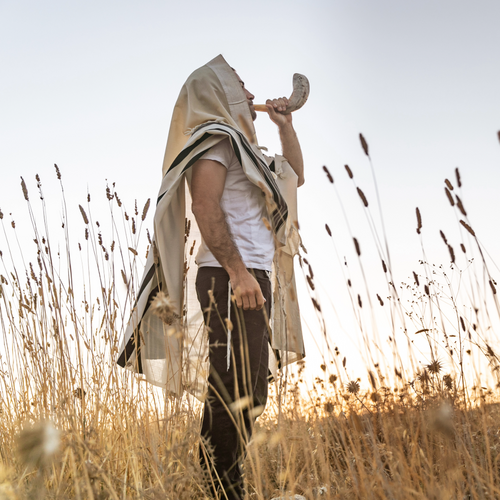
The Sinaitic Covenant serves as a bridge between YHWH’s promise to Abraham and Jesus’s permanent kingdom on earth. In theological schools, professors ask students to think deeply about the eschatological “now” and “not yet” — this age (aeon), as Lee Camp points out, and the age to come.[1] The present aeon, of course, began when YHWH tabernacled among us in Jesus. Jesus’s first coming didn’t alleviate all that is broken in this world, but it certainly cemented an inevitable end: one day, “[Jesus] will wipe away every tear from [our] eyes; and there will no longer be any death; there will no longer be any mourning, or crying, or pain” (Rev 21:4). And when will the inevitable outcome begin? No one knows for certain, but if YHWH’s consistent — and He always is — we now look toward the fall appointed times, beginning with the Day of Shouting (Yom Teruah).[2]
Footnotes for Purpose 6
[1] Camp, Mere Discipleship, 68.
[2] Also Feast of Trumpets. Chiastic structure suggests that Yom Teruah, the fourth of seven mikra-kodesh, is a focal point. Whereas Passover pointed to Jesus’s first coming, Yom Teruah may point to the second. Two reasons seem to stand out. First, Yom Teruah is associated with a king’s coronation (see Tadmor, “The Chronology of the First Temple Period,” 44–51). Second, because the start of Yom Teruah necessitated the citing of a new moon, no one knew the “day or the hour” or its appearing.
[2] Also Feast of Trumpets. Chiastic structure suggests that Yom Teruah, the fourth of seven mikra-kodesh, is a focal point. Whereas Passover pointed to Jesus’s first coming, Yom Teruah may point to the second. Two reasons seem to stand out. First, Yom Teruah is associated with a king’s coronation (see Tadmor, “The Chronology of the First Temple Period,” 44–51). Second, because the start of Yom Teruah necessitated the citing of a new moon, no one knew the “day or the hour” or its appearing.
He didn't come to abolish.
“Do not think that I came to abolish the Law or the Prophets; I did not come to abolish but to fulfill. For truly I say to you, until heaven and earth pass away, not the smallest letter or stroke shall pass from the Law until all is accomplished. Whoever then annuls one of the least of these commandments, and teaches others to do the same, shall be called least in the kingdom of heaven; but whoever does and teaches them, he shall be called great in the kingdom of heaven.”
— Our Messiah, Sermon on the Mount
— Our Messiah, Sermon on the Mount